
From RNNs to Mamba: A Mathematical Journey Through Modern Sequence Models: Part 2

Memory, State Representations, and Recurrent Neural Networks 3. Why Sequence Models Need Memory In Part 1, sequential data was represented as an ordered collection of observations, [latex] \begin{equation} X={x_1,x_2,\ldots,x_T}. \tag{3.1}…
Continue ReadingFrom RNNs to Mamba: A Mathematical Journey Through Modern Sequence Models: Part 2

From RNNs to Mamba: A Mathematical Journey Through Modern Sequence Models: Part 1

In this section, we establish the mathematical foundations of sequential data that will be used throughout the remainder of this article. Specifically, we discuss: What is sequential data? — Definition…

Continue ReadingFrom RNNs to Mamba: A Mathematical Journey Through Modern Sequence Models: Part 1

Liver fibrosis classification from ultrasound using machine learning: a systematic literature review

Publication details The paper is published in the Journal of Abdominal Radiology: click here Abstract Purpose Liver biopsy was considered the gold standard for diagnosing liver fibrosis; however, with advancements…

Continue ReadingLiver fibrosis classification from ultrasound using machine learning: a systematic literature review

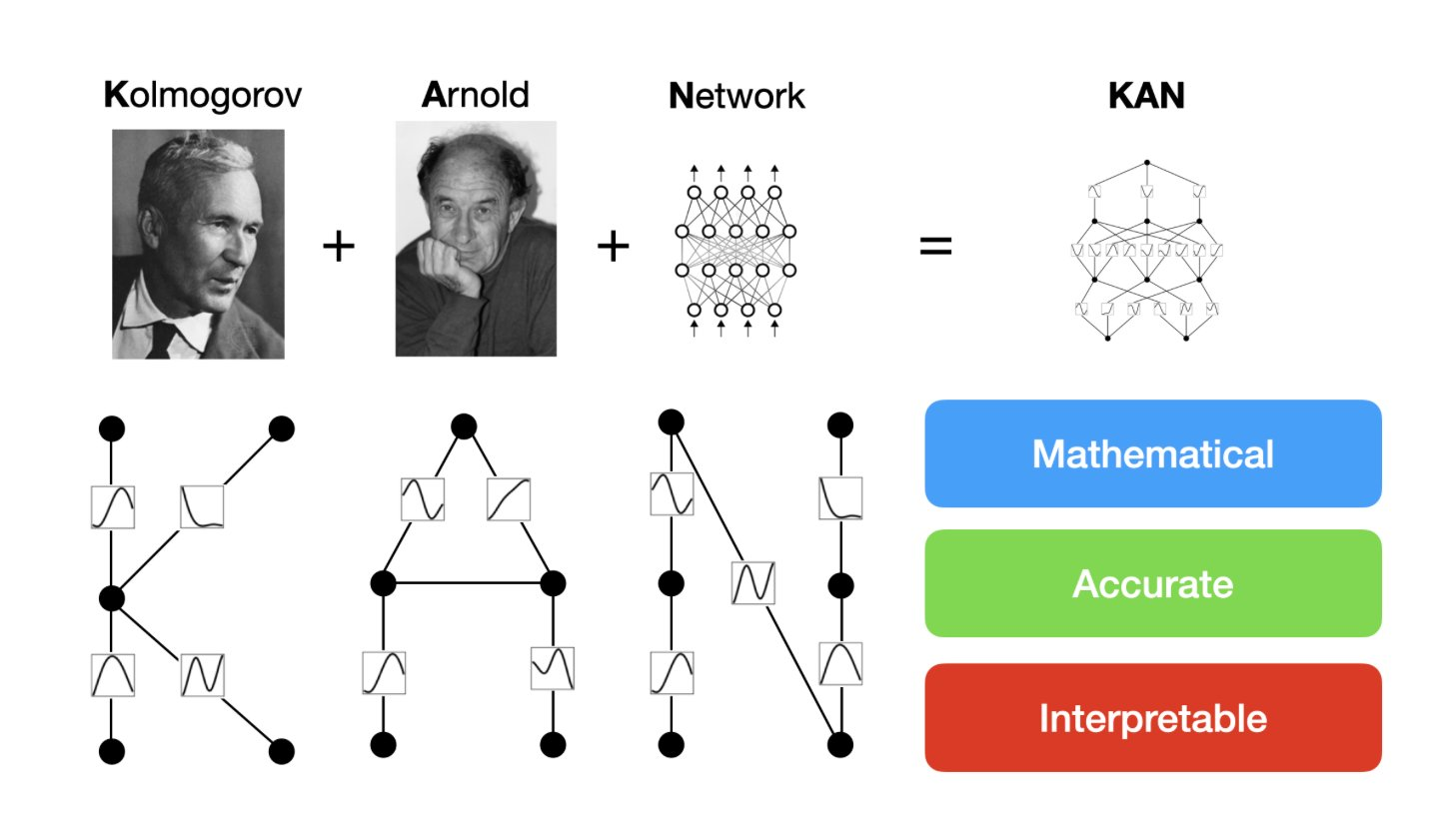
KANs: The Future of Neural Networks? Exploring the Power of Learnable Activations

The Kolmogorov-Arnold Representation Theorem The foundation of KANs lies in the Kolmogorov-Arnold Representation Theorem (KART). This theorem states that any continuous multivariate function can be represented as a superposition of…

Continue ReadingKANs: The Future of Neural Networks? Exploring the Power of Learnable Activations

Visualizing Deep Learning: Filter, Class Activation Maps and LIME

What is covered? OverviewImporting librariesLoading the MNIST datasetPreprocessingLoading the trained modelEvaluationModel visualizationFilter visualizationClass activation mapLIMEConclusion Overview Unlike machine learning models, the deep learning models lack transparency in the decision making…

Continue ReadingVisualizing Deep Learning: Filter, Class Activation Maps and LIME