
1️⃣ What Measurement Means (Intuition)
A quantum state:

does not have a definite value.
👉 Measurement asks a question:
“If I observe this system in a certain basis, what outcome do I get?”
The act of measurement:
- Produces a classical number
- Destroys the quantum state
- Is probabilistic
2️⃣ Measurement Postulate (Formal Rule)
When you measure a state (  ):
):
Possible outcomes
- Each outcome corresponds to a basis state
Probability of outcome (i)

State after measurement
If outcome (i) is observed:

📌 This is called state collapse.
3️⃣ Measurement in the Computational (Z) Basis
The most common measurement is in the computational basis:

Example:

- Probability of measuring
0→ 0.3 - Probability of measuring
1→ 0.7
After measurement, the state becomes either:
- (
 ) or
) or - (
 )
)
4️⃣ Measurement as an Operator (Projective Measurement)
Each outcome has a projector:

Probability:

This formulation is extremely important for QML.
5️⃣ Expectation Value (What QML Actually Uses)
In machine learning, we usually do not care about single-shot outcomes.
Instead, we compute an expectation value.
Observable (example: Pauli-Z)
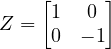
Expectation value:

This gives a continuous value between ([-1, 1]).
📌 This is the output of a quantum model.
6️⃣ Why Expectation Values Are Crucial for QML
| Single Measurement | Expectation Value |
|---|---|
| Random (0 or 1) | Smooth, deterministic |
| High variance | Stable |
| Useless for training | Trainable output |
🧠 Key insight
QML models learn by matching expectation values to labels.
7️⃣ How Expectation Values Are Estimated (Shots)
Quantum hardware gives random samples.
Procedure:
- Run the circuit
- Measure → get 0 or 1
- Repeat (N) times (shots)
- Average the results

Where:
 if outcome 0
 if outcome 1
8️⃣ Measuring Multiple Qubits
For two qubits, we measure operators like:

Possible outcomes:
- 00, 01, 10, 11
Expectation value:

📌 This captures correlations, not just individual values.
9️⃣ Measurement Bases (X, Y, Z)
You are not restricted to Z-basis.
| Basis | How |
|---|---|
| Z | Measure directly |
| X | Apply Hadamard → measure Z |
| Y | Apply (S^\dagger H) → measure Z |


🧠 ML interpretation
Changing measurement basis = extracting different features.
10️⃣ Measurement in Variational Quantum Circuits (QML)
A typical QML model does:

Prediction:

Loss:

11️⃣ Why Measurement Is Nonlinear (Very Important)
Quantum evolution:

(linear)
Measurement:

(non-linear)
👉 This is the only source of nonlinearity in QML.
12️⃣ One-Paragraph Summary
Quantum measurement converts a quantum state into classical information by probabilistically projecting it onto a basis state. In quantum machine learning, we do not rely on single measurement outcomes but instead estimate expectation values of observables by repeated measurements. These expectation values serve as model outputs, enabling loss computation and training through classical optimization.